
How many work outfits do you need at a minimum?
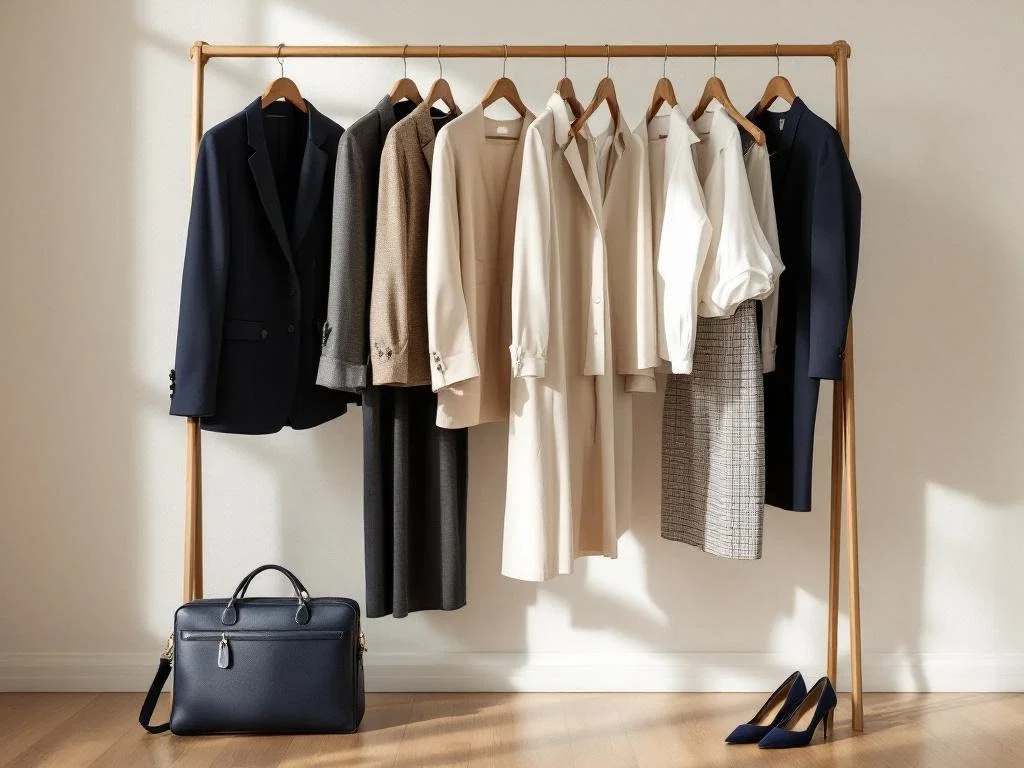
For a full work week, you will need at least 5 to 7 complete work outfits, taking into account laundry routines and unexpected situations. Most professionals opt for 7 to 10 outfits to have enough variety without having to wash every day. This number gives you the flexibility to adapt your wardrobe to different work activities, from important meetings to casual Fridays.
What is the ideal number of work outfits for five working days?
The ideal number of work outfits for a five-day work week is between 7 and 10 complete outfits. This gives you enough variety without having to do laundry halfway through the week. The practical 5-7-10 rule works as follows: 5 outfits is the absolute minimum, 7 gives you breathing room, and 10 offers optimal flexibility.
For a formal work environment where you have to wear a suit every day, you will need at least five complete suits plus a few spare blouses or shirts. This will prevent your clothes from wearing out too quickly due to intensive use. In a business casual environment, three to four pairs of pants or skirts will suffice, combined with five to seven different tops and two to three blazers.
Your laundry routine plays an important role in determining the number of outfits you need. If you do laundry once a week, you will need at least seven complete outfits to get through the week. You should also take seasonal factors into account: in summer, you may need more changes of clothes due to perspiration, while in winter you can wear items such as blazers more often without washing them.
How do you build a functional basic work wardrobe?
A functional basic work wardrobe starts with selecting timeless basics that can be easily combined with each other. Start with 3-4 neutral pants or skirts in colors such as black, navy, gray, or beige. Add 5-7 blouses or tops in complementary colors, making sure to choose different styles for variety.
The core of a versatile work wardrobe consists of these essential items:
- 2-3 well-fitting blazers in neutral colors
- 3-4 pairs of pants or skirts that go with all blazers
- 5-7 blouses, shirts, or tops in different styles
- 2 dresses that can be worn solo or with a blazer
- 1-2 cardigans or sweaters for layering


When choosing colors, consistency is important. Build your wardrobe around a color palette of no more than 4-5 colors that harmonize well with each other. Neutral base colors such as navy, black, gray, and beige form the foundation, complemented by 1-2 accent colors that match your skin tone. This approach ensures that virtually all items can be combined with each other.
Invest in quality over quantity. Comfortable workwear that fits well and is made from durable materials will stay looking good for longer and feel comfortable during long working days. Choose fabrics that require little maintenance and don't crease easily, such as travel-friendly fabrics that are ideal for busy professionals.
What factors determine how much workwear you need?
The amount of workwear you need is determined by various personal and professional factors. Your work environment and dress code are the most important factors: a law firm requires a different wardrobe than a creative agency. The frequency of customer contact and external meetings also influences how much formal clothing you need.
Your personal lifestyle plays a major role. How often do you wash your clothes? Do you have time to iron? Do you exercise before or after work, which means you have to change more often? These practical considerations help determine how many changes of clothes you need. Your commute to work is also relevant: long commutes on public transport may mean you need more spare items.
Seasonal changes require adjustments to your work wardrobe. In the Netherlands, you have four distinct seasons, which means you need both light summer clothing and warmer winter outfits. A smart solution is to work with layers: basic pieces that can be worn all year round, supplemented with seasonal items such as cardigans, scarves, or light jackets.
Your budget and available storage space are practical limitations that need to be taken into account. If you have a limited budget, it is better to invest in fewer items of good quality that will last a long time. Do you have limited closet space? Then focus on versatile pieces that serve multiple functions and choose wrinkle-free materials that don't take up much space.
How can you cleverly combine work outfits for maximum variety?
The mix-and-match principle is the key to a versatile work wardrobe with limited items. By combining items cleverly, you can create 20-30 different outfits with just 10-12 basic pieces. Start by choosing a coherent color scheme in which all items can be combined with each other.
The capsule wardrobe method works great for work clothes. Select:
- 3 pants/skirts in neutral colors
- 5 tops in different styles but harmonizing colors
- 2 blowers that fit all parts
- 1 dress that works both with and without a blazer
With these 11 items, you can put together at least 15 different outfits. Add accessories such as scarves, belts, or jewelry, and you'll double your options without buying any extra clothes.
Accessories are your secret weapon for variety. A simple black dress can be transformed from business to party wear with the right accessories. A statement necklace, a colorful scarf, or an eye-catching belt can completely change a basic outfit. Invest in a few quality accessories that can upgrade your outfit without taking up too much closet space.
Plan your outfits per week for optimal variety. On Sundays, lay out your outfits for the entire week, taking your schedule into account. This prevents you from wearing your favorite items too often and ensures a balanced distribution of your wardrobe. Photograph successful combinations on your phone as a reminder for busy mornings.
How do you know if you have too much or too little work clothing?
You don't have enough work clothes if you regularly experience stress in the morning because you have nothing to wear, or if your favorite items are worn out from frequent wear. If you run out of clean clothes halfway through the week or have to iron regularly because everything is wrinkled, it's time to expand your wardrobe.
Signs that you have too much work clothing include:
- Clothes that have been hanging in your closet for months with the tags still on them
- Items you only wear once a year
- Duplicate items in virtually the same style or color
- An overflowing closet where you no longer know what you have
- Clothes that no longer fit but that you still keep
The ideal work wardrobe is balanced: you have enough choice without being overwhelmed. A good test is the 80/20 rule: do you wear 80% of your work clothes regularly? Then you're good. Is 50% or more hanging unused in your closet? Then it's time to critically evaluate your wardrobe.
Impulse purchases are often the culprit behind an unbalanced wardrobe. That beautiful blouse in the sale seemed like a good deal, but it doesn't match the rest of your clothes. To avoid this, apply the 24-hour rule: wait a day before buying something. Ask yourself: does this match at least three items I already own? Will this fill a gap in my wardrobe?
An annual wardrobe evaluation helps you maintain balance. Clear out items that no longer fit, are worn out, or no longer suit your current work style. This creates space for new additions that enhance your wardrobe.
How &Co Woman helps you put together your perfect work wardrobe
&Co Woman understands that putting together a functional work wardrobe can be challenging. That's why we offer a carefully selected collection of timeless workwear that will last for years and can be mixed and matched perfectly. Our approach helps you invest wisely in quality over quantity:
- Timeless basics in neutral colors that can be combined endlessly
- High-quality materials that retain their shape and require little maintenance
- Perfect fit that gives you confidence during important workdays
- Versatile pieces that can be worn from day to night
- Durable quality means you don't have to replace it as often
Explore our shop and build your ideal work wardrobe step by step with pieces that complement each other perfectly and always make you feel well-dressed for whatever your day brings.
Frequently Asked Questions
How can I make my work wardrobe season-proof without buying too many clothes?
Invest in trans-seasonal basics such as medium-weight blazers, long-sleeved cotton blouses, and wool-polyester blend trousers. Work with the layering system: wear a thin turtleneck under a sleeveless dress in winter, or roll up the sleeves of a blouse in summer. Choose neutral colors that work all year round and add seasonal accents with accessories such as scarves or light cardigans.
What are the biggest mistakes people make when putting together their work wardrobe?
De meest voorkomende fout is het kopen van losse items zonder na te denken over combinatiemogelijkheden, waardoor je ‘weesjes’ in je kast krijgt die bij niets passen. Andere veelgemaakte fouten zijn: alleen focussen op speciale gelegenheden in plaats van dagelijkse werkkleding, niet investeren in goede basics, en het negeren van pasvorm ten faveure van trends. Ook het niet aanpassen van je garderobe aan veranderingen in je werksituatie of lichaam zorgt voor een niet-functionele kledingkast.
How do I maintain my work clothes so that they last longer?
Was je werkkleding binnenstebuiten op lage temperatuur (30°C) en gebruik een fijnwasmiddel zonder bleekmiddel. Hang blazers en broeken na het dragen uit te luchten voordat je ze terughangt – vaak is wassen niet nodig. Investeer in goede kleerhangers die de schoudervorm behouden en gebruik cederhout tegen motten. Wissel je schoenen en kleding dagelijks af zodat ze kunnen ‘rusten’ en hun vorm behouden, en behandel vlekken direct om permanente schade te voorkomen.
How much should I budget for a complete work wardrobe?
For a basic, good-quality work wardrobe, you can expect to spend €1,500-2,500, depending on your work environment. Divide your budget according to the 60-30-10 rule: 60% for timeless basics (trousers, blazers, dresses), 30% for complementary items (blouses, sweaters), and 10% for accessories. Build your wardrobe gradually and invest in quality basics first. Take advantage of seasonal sales to supplement your collection, but only buy items that enhance your wardrobe.
How can I create a professional look with a limited number of garments?
Focus op perfecte pasvorm – laat indien nodig items vermaken voor een op maat gemaakte look. Kies voor klassieke snits in luxe materialen zoals wol, zijde-mengsels of hoogwaardige katoen die er duurder uitzien dan ze zijn. Zorg altijd voor verzorgde details: gestreken kleding, schone schoenen en verzorgde accessoires maken het verschil. Investeer in één statement blazer van uitstekende kwaliteit die elke basic outfit direct professionaliseert.
When is it time to update my work wardrobe, and how do I go about it?
Renew your work wardrobe when your career takes a new turn, your body changes, or when more than 30% of your clothes show signs of wear and tear. Start with a thorough wardrobe analysis: photograph all your outfits and identify what is missing. Make a priority list of items to replace and new purchases. First, replace worn-out basics, then add items that fill gaps in your wardrobe, and finally invest in a few special pieces that elevate your style.