
How do you recognize quality in stretch dresses?
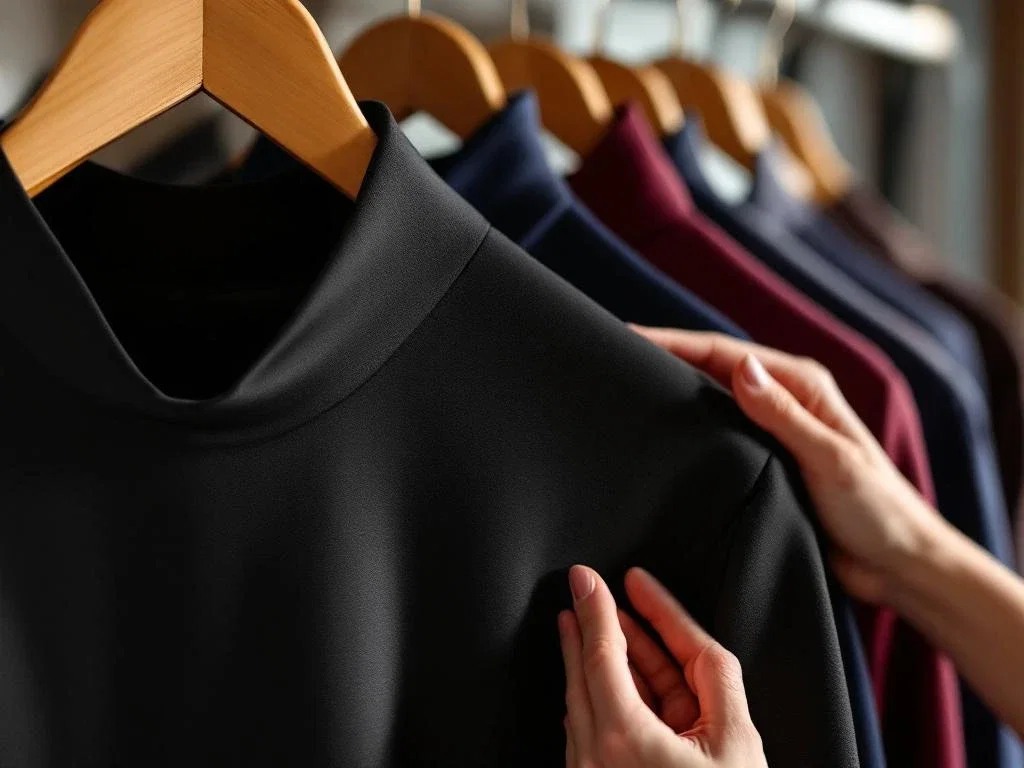
Recognizing quality in a stretch dress is easier than you think. Good stretch dresses have a sturdy, resilient fabric, usually with 5-15% elastane, feel thick enough without being see-through, and have reinforced seams that give without stretching out. The fabric should spring right back after stretching, the dress should fit comfortably without pinching or sagging, and the finish should be neat, with straight seams and no loose threads.
What actually makes a stretch dress good quality?
You can recognize a high-quality stretch dress by four key features: a fabric composition with the right percentage of elastane, sturdy construction with reinforced seams, good elasticity that springs back, and materials that keep their shape after multiple washes. Together, these aspects determine how long you’ll enjoy your dress.
The fabric composition is the foundation of every good stretch dress. Look for fabrics with a blend of natural fibers such as cotton or viscose (60-95%) combined with synthetic fibers for strength and a small percentage of elastane (usually 5-15%) for stretch. This combination provides comfort, breathability and shape retention.
When it comes to construction, pay particular attention to the seams. Good stretch dresses have double or reinforced seams in places under a lot of tension, such as the waist, hips and armholes. The seams should be straight, without ripples or puckers, and move with the fabric without stretching out.
Test the elasticity by gently stretching the fabric. Quality stretch fabric springs right back to its original shape without leaving stretched-out areas. This is especially important at the waistband and sleeves, where the fabric takes the most strain.
You can spot durability in details such as the hem finish, the quality of any zippers or buttons, and how the fabric feels. Thicker material with a good structure lasts longer than thin, smooth fabrics that pill quickly or lose their shape.
How do you check the fabric composition of a stretch dress?
You’ll find the fabric composition on the care label inside the dress, usually in the side seam or at the neck. For stretch dresses, the ideal composition is 85-95% main material (cotton, viscose, polyester) with 5-15% elastane or spandex. This ratio gives enough stretch without the dress losing its shape.
Read the care label from top to bottom. The fibers with the highest percentage are listed first, followed by the other components. Look for terms like elastane, spandex or Lycra – these are all names for the same stretch fiber. Polyamide is often added for extra strength and shape retention.
Different compositions each have their own advantages. Cotton with elastane (for example 95% cotton, 5% elastane) is breathable and comfortable for everyday wear. Viscose with elastane (such as 60% viscose, 31% polyamide, 9% elastane) gives a fluid drape and is ideal for dressier styles. Polyester blends are wrinkle-free and hold their color well.
For sporty or casual dresses, a higher percentage of synthetic fibers works perfectly, such as 87% polyamide with 13% elastane. These fabrics keep their shape, dry quickly and are easy to care for. For business or elegant occasions, you’re better off choosing natural fibers with a small percentage of stretch.
Also pay attention to the thickness of the fabric in combination with the composition. A dress with a lot of elastane but thin fabric becomes see-through sooner and loses its shape. Look for a good balance between stretch and substance for lasting wearing comfort.
How do you recognize a good fit in stretch dresses?
You can recognize a good fit in a stretch dress by comfort without pinching, plenty of freedom of movement, and a dress that skims your figure beautifully without pulling or sagging. The dress should lie against your body without your underwear showing through from tension, and the fabric should move with you without stretching out during normal movement.
Start with the shoulder seams – these should sit exactly on the shoulder point, not hang over it or pull too tight. With sleeveless dresses, the armhole should sit comfortably without cutting in. The bust lines should fall naturally without horizontal creases (too tight) or sagging (too loose).
Test the freedom of movement by raising your arms, bending forward and walking a few steps. The dress should move with you without riding up or pulling tight. At the waist and hips in particular, the fabric should give smoothly without forming tension lines.
The length should stay consistent while you move. A good stretch dress doesn’t ride up when you sit or walk. Check this by sitting down – the dress should rise no more than a few centimeters and fall right back when you stand up again.
Check the recovery by gently stretching the fabric in different areas. At the waist, hips and sleeves, the fabric should snap right back. If the fabric recovers slowly or stays stretched, the dress will quickly lose its fit.
What are the signs that a stretch dress will quickly lose its shape?
Warning signs of rapid shape loss are: fabric that is too thin and see-through, seams that ripple or already stretch when you try it on, a chemical smell that points to cheap fibers, and fabric that recovers slowly after stretching. These signs predict problems within just a few washes.
Fabric that is too thin is the most obvious sign. Hold the dress up to the light – if you can see through it or clearly see your hand, the fabric is too thin for everyday wear. Thin stretch fabric stretches out faster and becomes see-through in areas under tension.
Check the seams carefully. You can recognize poor seams by uneven stitches, loose threads, or seams that already ripple before the dress has even been worn. Especially at the side seams and around the armholes, the finish should be tight and straight. Single seams instead of double seams are also a sign of lower quality.
A strong chemical smell points to cheap synthetic fibers or poor dyeing processes. Although new clothing can always have a slight smell, it should be mild and fade quickly. A pungent chemical odor often lingers and indicates inferior materials.
Test the elasticity in different places. If the fabric springs back well in some places but not in others, this indicates uneven quality. This problem gets worse after washing, when the weaker areas stretch out permanently.
How do you test the quality of stretch fabric in the store?
In the store, you can do four simple tests: the stretch test to check how quickly the fabric springs back, the transparency check against the light, a seam check for strength and finish, and feeling the fabric thickness between your thumb and index finger. These tests give you instant insight into the quality without damaging the dress.
Do the stretch test by gently stretching a small piece of fabric 2-3 centimeters between your fingers and letting go. Good-quality stretch springs back completely within a second. Literally count – if it takes longer or the fabric doesn’t fully recover, don’t buy it.
For the transparency check, hold the dress up to the light at hip height. Your hand may be faintly visible, but not in detail. Test especially the areas that stretch the most, such as the seat and bust. If these areas are already see-through, it will only get worse when you wear it.
Check the seams by gently pulling on them. They should feel firm without giving. Also look at the inside – overlock stitching or French seams are signs of quality. Loose threads or uneven stitches predict problems.
Feel the fabric thickness by rolling the dress between your thumb and index finger. Quality stretch fabric feels substantial without being thick or stiff. The structure should feel even across the whole dress. Thin spots or differences in thickness indicate lower quality.
Which price range usually offers better-quality stretch dresses?
You’ll usually find good-quality stretch dresses from around 70-90 euros, with the sweet spot between 80-120 euros for everyday dresses. In this price range, you get solid fabric compositions, good construction and reasonable durability. Below 50 euros, quality is often unpredictable; above 150 euros, you’re mainly paying for the brand or design.
In the budget range up to 50 euros, you need to be extra critical. Some chains offer surprisingly good quality for little money, but always check the fabric thickness, seams and elasticity extra carefully. These dresses are often made from thinner fabrics with more polyester and less elastane, which leads to shape loss sooner.
The mid-price range of 70-120 euros offers the best value for money. Here you’ll find dresses with better fabric compositions, such as viscose blends with the right percentage of elastane, solid construction with reinforced seams, and finishes that last for several seasons. This investment pays for itself in wearing comfort and longevity.
Premium dresses above 150 euros justify their price with exceptional fabrics, perfect cuts and details such as lining or special finishes. For special occasions or if you’re looking for a timeless classic, this can be worth the investment. Just make sure you’re paying for quality, not only for a brand name.
Remember that sale prices can be misleading. A 120-euro dress for 60 euros can be a great deal, but a 40-euro dress for 20 euros is probably still of lower quality. Focus on the original price as an indicator of the quality level, not on the discount percentage.
How &Co Woman helps you find quality stretch dresses
Recognizing quality in stretch dresses is all about attention to detail. Whether you’re in the store or shopping online, this knowledge helps you make better choices. A good stretch dress is an investment in your wardrobe that pays off in wearing comfort and versatility. & Co Woman offers a carefully curated collection of stretch dresses that meet every quality standard:
- Fabric compositions with the ideal blend of natural fibers and 5-15% elastane
- Reinforced seams at all stress points for a long-lasting fit
- Pre-tested elasticity that springs back even after many washes
- Different price ranges with no compromise on basic quality
- Detailed fit information and size charts for the perfect choice
Explore our shop with quality stretch dresses and experience for yourself the difference good quality makes in wearing comfort and durability. At & Co Woman, quality comes first, so you always know you’re buying a dress that will last.
Frequently Asked Questions
How do you keep a stretch dress from stretching out after washing?
Always wash stretch dresses inside out at 30 degrees with a delicate detergent and avoid the dryer. Use a short spin cycle (max 800 rpm) and hang the dress wet on a hanger to drip dry. Never wring wet stretch fabric and avoid fabric softener, as it breaks down the elastic fibers.
What do you do if your stretch dress starts to pill?
Use a fabric shaver or special de-pilling device to gently remove the pills. Prevent pilling by washing dresses inside out, avoiding friction with rough materials, and not wearing the dress for too long at a stretch. Persistent pilling is often a sign that the fabric quality isn’t optimal.
What’s the best way to store stretch dresses to prevent shape loss?
Hang stretch dresses on padded or velvet hangers to prevent stretched-out shoulders. Never fold them double over a hanger and don’t cram them into a full closet. For long-term storage, you can roll them instead of folding, and keep them in a cotton garment bag to protect them from dust and light.
When is it time to replace a stretch dress?
Replace a stretch dress when the elasticity is permanently gone, the fabric becomes see-through in stress areas, or the dress no longer regains its shape after washing. Permanent discoloration, holes at the seams or a dress that constantly rides up are also signs that it’s time for a replacement.
Can a stretched-out stretch dress still be saved?
You can sometimes save slightly stretched dresses by washing them in hot water (check the care label first!) and letting them dry flat. For partial stretching, you can steam the elastic areas with a steam iron. Unfortunately, permanently stretched elastane can’t be restored – prevention through good care remains the most important thing.
What underwear is best under a stretch dress?
Choose seamless underwear in a skin tone or a color that matches the dress. Avoid cotton underwear with thick seams and opt for smooth microfiber. Good shapewear or a slip can add extra comfort and keeps the dress from clinging to your skin. Keep in mind that shapewear that’s too tight can actually create lines under stretch fabric.