
How does workwear affect your performance at the office?
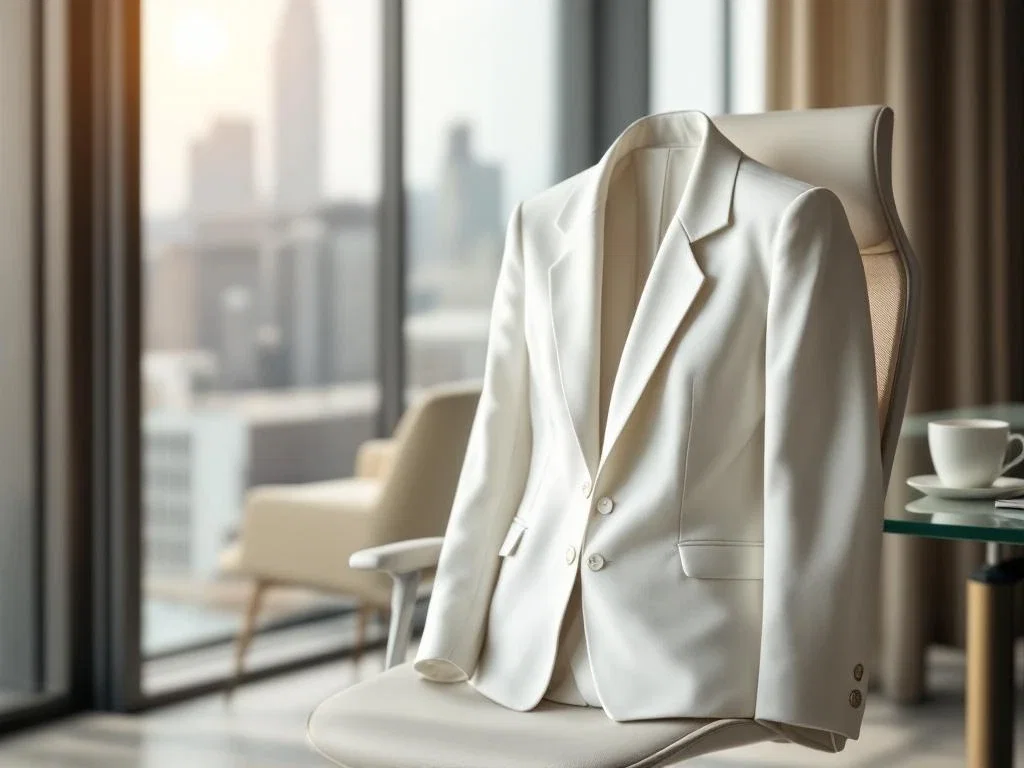
Workwear has a direct influence on your performance through the psychological phenomenon of ‘enclothed cognition’ – your brain associates certain clothing with specific roles and behaviors. Professional clothing activates a business mindset, improves your focus and increases your productivity by an average of 15-20%. The right outfit influences not only how others see you, but above all how you experience yourself and perform at the office.
Why does your outfit actually impact your workday?
Your outfit influences your workday because your brain automatically makes associations between clothing and behavior. This psychological mechanism, known as ‘enclothed cognition’, makes formal clothing leave you more alert and focused. When you’re dressed professionally, your brain unconsciously adopts a business attitude, which improves your cognitive performance.
The effect of clothing on your performance works through three mechanisms. First, business attire activates specific brain areas associated with abstract thinking and problem solving. You literally think more sharply when you wear a blazer than when you work in leisurewear. Second, your outfit influences your posture – formal clothing gives you a straighter back and more confident body language.
The third mechanism is the feedback loop between how you look and how you feel. Comfortable workwear that looks professional gives you the best of both worlds: you feel at ease while your brain is in work mode. This explains why remote workers who get dressed as if they’re going to the office are more productive than colleagues who curl up behind their laptop in pajamas.
How does your clothing affect your confidence during presentations?
Your clothing affects your confidence during presentations through what psychologists call the ‘power dressing effect’. When you wear clothes in which you feel strong and competent, your body radiates this through your posture and voice. A well-fitting suit or a professional dress literally activates your ‘power pose’ – you stand taller, speak more clearly and make more eye contact.
The relationship between clothing choice and presentation skills is measurable in your physiology. Professional clothing lowers your stress hormone cortisol and raises testosterone, the hormone associated with assertiveness and confidence. This biological effect translates into a stronger voice, a calmer speaking pace and more persuasive body language during your presentation.
For maximum confidence, choose clothing that follows three principles. Choose items you can move comfortably in without constantly thinking about your outfit. Make sure your clothing matches your audience’s expectations – too casual undermines your authority, too formal creates distance. Wear colors that energize you: navy radiates authority, gray professionalism, and accent colors such as red or purple show personality without detracting from your professionalism.
What is the difference between ‘dressed for comfort’ and ‘dressed for success’?
‘Dressed for comfort’ prioritizes physical ease with soft fabrics and loose fits, while ‘dressed for success’ focuses on a professional look and authority. The difference lies mainly in the psychological impact: comfort clothing relaxes your brain, while success clothing makes you mentally sharper. Modern comfortable workwear combines both by using stretch fabrics and ergonomic designs that look professional.
The performance impact of both approaches differs significantly per work situation. Comfort clothing works excellently for creative tasks and long stretches of desk work, where physical discomfort can disrupt your concentration. You think more freely and creatively when your body is relaxed. Success clothing performs better during client contact, negotiations and leadership moments, where your presence directly influences your effectiveness.
The ideal work wardrobe balances comfort and professionalism through smart fabric choices and modern cuts. Look for items with technical properties such as four-way stretch, temperature regulation and wrinkle recovery. A blazer in comfortable ponte fabric gives you the authority of traditional business attire with the freedom of movement of sportswear. Invest in basics that serve both goals: well-cut pants in technical fabric, blouses with stretch, and structured tops that don’t pinch.
Which colors in your workwear help you be more productive?
Navy increases your concentration and analytical thinking, gray promotes neutrality and objectivity, while black radiates authority but can also cause fatigue when worn for long periods. Shades of green stimulate creativity and reduce eye strain, which is especially useful for screen work. Accent colors such as burgundy or aubergine boost energy without being overwhelming.
Color psychology in workwear works through two routes: your own mental state and the perception of others. Blue tones activate the parasympathetic nervous system, making you calmer and more focused during complex tasks. Warm colors such as terracotta or cognac stimulate social interaction and make you more approachable during teamwork. Neutral colors form a stable base that saves your cognitive energy – your brain doesn’t have to process strong color stimuli.
For different workdays, color psychologists recommend strategic choices. Wear navy or dark gray for important meetings where you want to be taken seriously. Choose softer shades such as light gray, beige or pastel blue for days full of admin and focused work. Add pops of color through accessories on days when you need energy and creativity – a brightly colored scarf or bag gives just enough stimulus without undermining your professionalism.
How do you choose the right outfit for different workdays?
Choose your outfit based on your main activity that day: formal clothing for external meetings, smart casual for office work, and comfortable layers for flexible workdays. Plan your wardrobe per week by scanning your calendar and deciding on one main outfit per day. Keep transition moments in mind – a blazer you can put on and take off transforms a casual look into a business one when needed.
A strategic work wardrobe consists of modular items you can combine depending on the situation. Start with a capsule wardrobe of neutral basics: two good pairs of pants, three blouses, two blazers and one dress or jumpsuit. These items should all work together so you create maximum variety with minimal pieces. For meeting days, pair a blazer with contrasting pants; for work-from-home days, wear the same pants with a comfortable knit top.
The key to successful outfit planning is thinking ahead without becoming rigid. Lay out your clothes the night before, but keep a backup outfit on hand for unexpected situations. For after-work networking events, stash a pair of elegant shoes and statement jewelry in your desk drawer – small tweaks that make your day outfit evening-ready. On casual Friday, stay professional by keeping one formal element: wear your jeans with a smart blouse, or combine a casual top with dress pants.
What happens to your productivity when your dress code disappears?
Without a dress code, employees initially experience more creativity and comfort, but after a few weeks productivity often drops due to a lack of structure. Losing clothing guidelines reduces the mental separation between work and private life, which can cause concentration problems. Teams without a dress code report more distractions and less professional focus, especially during virtual meetings.
The effects of flexible dress codes on team dynamics are complex and context-dependent. In creative sectors, freedom of dress stimulates innovation and authenticity – people feel freer to think outside the box when they can dress the way they want. In more traditional work environments, the disappearance of dress codes can lead to confusion about professional standards and reduced respect for hierarchy. The balance lies in creating guidelines that allow room for personal expression within professional boundaries.
To come across as professional without a strict dress code, develop a personal standard based on your work context. Observe what successful colleagues wear and tailor your wardrobe accordingly, with room for your own style. Invest in quality basics that look polished in any combination – well-maintained clothing communicates professionalism more strongly than specific items. Create your own ‘uniform’ of favorite combinations that give you confidence, so your mental energy goes to your work instead of daily clothing choices.
How &Co Woman helps with professional workwear that boosts performance
The influence of workwear on your performance is more powerful than many people realize. From activating your professional mindset to boosting your confidence during presentations – the right outfit is a tool for success. & Co Woman understands this balance perfectly and offers the solution for ambitious women who refuse to choose between comfort and professionalism:
• Technical fabrics with four-way stretch that move with you without losing their shape
• Ergonomic designs that guarantee a perfect fit for all body types
• Versatile basics that take you from boardroom to drinks
• Lasting quality that justifies an investment in your career
• Color psychology applied in collections that optimize your mental sharpness
Discover how & Co Woman transforms your workday with clothing that brings out your best professional self. Shop now and experience the difference of workwear that works as hard as you do.
Frequently Asked Questions
How do I build an effective work wardrobe on a limited budget?
Start by investing in 5-7 high-quality basics in neutral colors that you can mix and match. Rather buy one good pair of pants that lasts for years than three cheap ones. Shop the sales for pricier items such as blazers, and fill in with affordable basics from chains that offer good value for money. Focus on timeless pieces instead of trends, and take good care of your clothes so they last longer.
What do I do if my employer suddenly switches from formal to casual?
Adjust your wardrobe gradually by first combining your formal items with casual pieces – for example, wear your dress pants with a modern knit or your blazer over a basic T-shirt. Observe what managers and successful colleagues wear and follow their lead. Always stay one level more professional than strictly necessary; this gives you flexibility for unexpected situations such as client visits.
How do I prevent working from home in comfortable clothes from sabotaging my productivity?
Create a ‘work uniform’ for home that is comfortable but not sloppy – think smart joggers with a structured top or a comfortable dress that looks professional on camera. Get fully dressed, including shoes, even if you don’t see any colleagues. Change into leisurewear at the end of your workday to create a mental separation between work and personal time.
Which clothing mistakes do most people unknowingly make at the office?
The biggest mistake is wearing poorly fitting clothes – items that are too tight or too loose undermine your professionalism regardless of quality. Other common mistakes are neglecting care (wrinkles, pilling, worn hems), wearing too many trends at once, and overlooking details such as visible underwear or worn-out shoes. People also often underestimate the importance of good underpinnings that help outerwear drape well.
How do I combine sustainability with a professional work wardrobe?
Choose quality over quantity and invest in timeless pieces made from sustainable materials such as organic cotton, Tencel or recycled fabrics. Shop secondhand for designer blazers and coats – these are often excellently preserved. Learn basic repair techniques or find a good tailor for upkeep. Choose brands that are transparent about their production process and offer repair services.
What is the best approach if your workwear doesn’t match your personal style?
Look for subtle ways to add personality within professional boundaries – use accessories such as jewelry, watches or bags to express your style. Experiment with different silhouettes within the dress code, such as wide-leg pants instead of a pencil skirt. Opt for interesting textures or subtle patterns in permitted colors. Focus on a perfect fit and high-quality fabrics – these details make even conservative clothing stylish.