
What is the difference between casual and formal workwear?
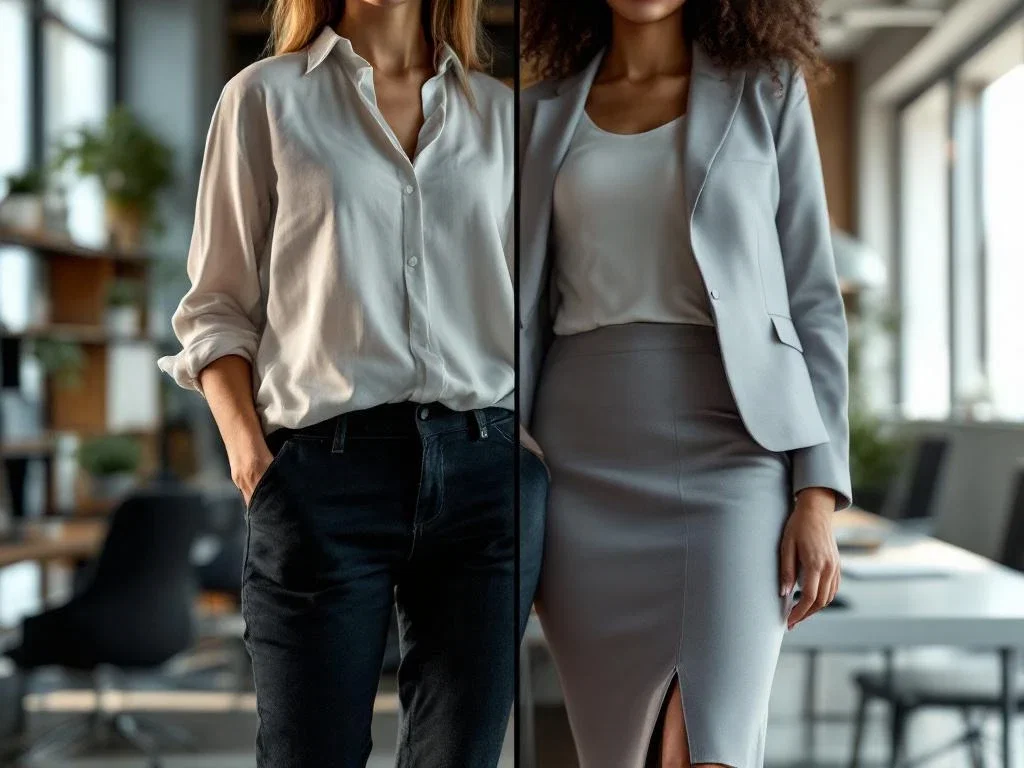
The difference between casual and formal workwear lies mainly in the overall look, the pieces and the occasions you wear them for. Formal workwear consists of smart suits, blazers and dresses in neutral colors, while casual workwear offers more freedom with jeans, sweaters and comfortable fabrics. The choice depends on your work environment, company culture and the activities you have planned for the day.
What are the basic differences between casual and formal workwear?
The main differences between casual and formal workwear are in the pieces, fabrics and overall presentation. Formal workwear includes structured items such as suits, blazers, dress pants and dresses in classic colors like black, gray and navy. Casual workwear consists of jeans, chinos, sweaters, polos and blouses in a variety of colors and prints.
You’ll see clear differences in fabrics. Formal clothing often uses wool, cotton-polyester blends and heavier materials that hold their shape. Casual workwear uses comfortable stretch fabrics, jersey and soft cottons. The fit differs too: formal is more tailored and structured, while casual gives you more freedom of movement.
The impact on professionalism is immediately noticeable. Formal clothing conveys authority and professionalism, which matters especially for first impressions. It shows you take the situation seriously. Casual clothing creates an approachable, relaxed atmosphere that can encourage creativity and openness. Both have their place in today’s working world.
When do you wear casual workwear at the office?
Casual workwear is appropriate for informal team meetings, creative brainstorming sessions and work environments where comfort comes first. Many modern offices, especially in tech and the creative industries, have a casual dress code because it boosts productivity and creativity. On Fridays (“casual Friday”) you can often dress more informally, too.
When working from home, comfortable workwear is ideal. A smart sweater with good pants gives you that professional feeling without the stiffness of formal clothing. It helps you stay in work mode while still feeling comfortable during long days behind your laptop.
Practical casual office outfits include nice jeans with a blazer and a basic top, or chinos with a knit sweater and clean sneakers. A dress with a cardigan or a jumpsuit with flats works well too. Most importantly, your clothes should look polished and suit the culture of your workplace. Avoid overly sporty items like sweatpants or worn-out clothing.
In which situations do you choose formal workwear?
Choose formal workwear for important presentations, client meetings, job interviews and official company events. These moments call for a professional look that conveys trust and competence. Formal clothing is also the norm at networking events, conferences and business dinners.
In traditional sectors such as finance, law and consulting, formal clothing often remains the standard. Here, your clothes communicate that you respect and take the company standards seriously. A well-cut suit or skirt suit shows that you pay attention to detail.
To put together professional outfits, start with basics in neutral colors. Dark pants or a skirt pair nicely with a white or light blue blouse and a matching blazer. Invest in quality: a well-fitting blazer in a good fabric makes an instant difference. Accessories such as a beautiful bag, classic shoes and subtle jewelry complete your look without overdoing it.
How do you combine casual and formal elements for business casual?
Business casual comes from clever combinations of formal and informal pieces. A classic approach is dress pants with a casual top and a blazer, or a dress with a denim jacket. The secret is balance: combine no more than one casual item with formal pieces for a professional yet approachable look.
Successful business casual outfits play with textures and layers. A cashmere sweater over a shirt gives a polished but relaxed look. A midi skirt with a T-shirt and blazer is perfect for creative offices. Versatile pieces such as great trousers can be worn with sneakers or pumps, depending on the occasion.
Common pitfalls are going too casual (like a hoodie under a blazer) or staying too formal. Avoid sportswear, very short skirts or low-cut tops. Pay attention to care, too: wrinkled clothes or worn shoes detract from your professional look. Business casual requires just as much attention to detail as fully formal wear.
Which pieces work for both dress codes?
Blazers, trousers and quality blouses form the foundation of a flexible work wardrobe. You can style these items both formally and casually. Wear a good blazer over a dress to an important meeting, or with jeans on a casual Friday. Trousers in neutral colors work with both pumps and loafers.
Invest in timeless basics such as a white blouse, a navy dress and black pants. These pieces stay relevant for years and suit a range of occasions. Choose fabrics with a little stretch for extra comfort without sacrificing professionalism. A beautiful knit cardigan is versatile too: wear it over a dress or pair it with pants.
When building a smart wardrobe, focus on quality over quantity. Better to buy three good blazers in different colors than ten cheap ones. Mix and match is the key word: with five tops and five bottoms, you can already create 25 different outfits. Add seasonal items such as lightweight summer pants or a warm turtleneck for winter.
How do you adapt your workwear to different company cultures?
Interpreting a company dress code starts with observing during your job interview or first day at work. Notice what colleagues and managers wear and adjust accordingly. Startups often have a casual culture with jeans and sneakers, while corporate offices usually go for business casual or formal.
When in doubt, ask about the dress code during your onboarding. Most companies have guidelines, but the unwritten rules are often more important. Creative industries value personal style and originality, while traditional sectors prefer uniformity and professionalism.
For different work environments, build a modular wardrobe. Start with a foundation that suits your main workplace and add items for specific situations. Keep a spare blazer at the office for unexpected formal moments. If you often travel between locations, invest in wrinkle-free fabrics that always look neat. Most importantly, feel confident in what you wear, because that conveys more professionalism than the most expensive outfit.
How &Co Woman helps with professional workwear
& Co Woman offers a complete solution for women who need both casual and formal workwear. Our collection is specially designed for the modern working woman who values flexibility and quality. With & Co Woman you get:
- Versatile basics you can style both formally and casually
- High-quality stretch fabrics for optimal comfort during long workdays
- Timeless designs in neutral colors that stay relevant for years
- Durable quality that withstands frequent wear and washing
- A well-thought-out mix-and-match philosophy for maximum wardrobe efficiency
Discover how & Co Woman helps you face every workday with confidence. Browse our shop and find the perfect balance between professionalism and comfort.
Frequently Asked Questions
How do I build a capsule work wardrobe on a limited budget?
Start by investing in 5-7 basics in neutral colors that you can mix and match: two good pairs of pants, a skirt, two blouses, a blazer and a dress. Buy these items during sales or at outlet stores of quality brands. Gradually add accessories and seasonal items. Focus on timeless designs rather than trends, and choose low-maintenance fabrics such as cotton-polyester blends.
What are the biggest mistakes people make when switching from formal to casual workwear?
The most common mistake is going too far toward the informal end with sportswear, worn-out jeans or overly casual footwear like flip-flops. Other pitfalls are neglecting care (wrinkled clothes, stains) and misjudging ‘smart casual’, for example by pairing a suit with sneakers. Remember that casual workwear still needs to look professional – choose neat, well-fitting items in good condition.
How do I handle dress code changes on the same workday?
Keep strategic items at the office, such as a blazer, a pair of smart shoes and a scarf or tie. Plan your outfit in layers: for example, wear dress pants with a basic top that you can upgrade with a blazer for formal moments. A foldable flat bag with pumps inside fits in your work bag. In the morning, dress for the most formal appointment of the day and adjust if needed by removing items.
Which colors work best for a versatile work wardrobe?
Build your foundation with neutral colors: navy, gray, black, white and beige. These colors are easy to combine and suit any dress code. Add accent colors with accessories or one standout piece per outfit. Burgundy, dark green and camel are professional colors that make your look more interesting without being too bold. Avoid bright neon colors and large prints for workwear, unless you work in a very creative environment.
How do I care for my workwear so it lasts longer?
Wash your workwear inside out at a low temperature and use a wool cycle for blazers and pants. Hang clothes up to air out right after wearing and don’t wash after every use – spot clean small stains. Invest in good hangers (no wire hangers) and store seasonal clothing in garment bags. Have important pieces like suits professionally cleaned and repair small damage right away to prevent it from getting worse.
What are good alternatives to a blazer in the warm summer months?
Choose lightweight alternatives such as a linen vest, a structured cotton cardigan or a kimono-style jacket in a thin fabric. A beautiful blouse with interesting details can also look professional enough without an extra layer. Cardigans in fine-knit cotton or viscose are comfortable and businesslike. Pay attention to fit – even lightweight items should look structured to come across as professional.